Technology Infrastructure Impact Model (TIIM)
Better Questions. Better Decisions. Better Infrastructure.
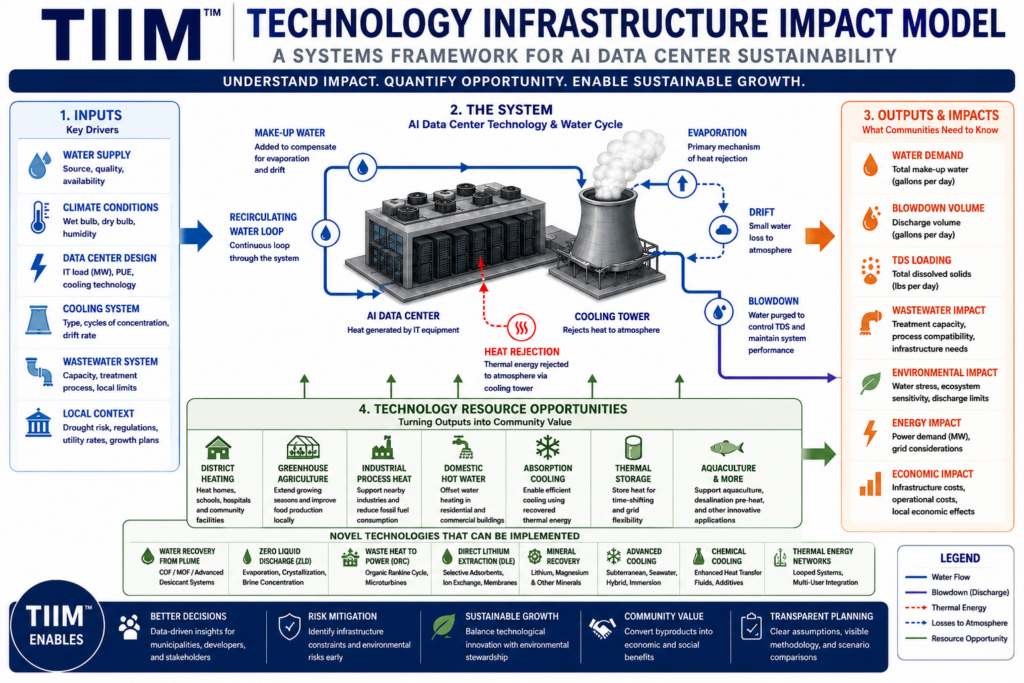
Why TIIM Exists
Infrastructure decisions increasingly affect entire ecosystems—communities, utilities, industries, natural resources, and economic development. Yet many planning processes still evaluate projects in isolation. TIIM provides a framework for understanding interdependencies before major infrastructure decisions are made.
The TIIM Process
A five-step framework for understanding impacts, opportunities, and interconnected infrastructure outcomes
⚙️ 1. Inputs
Every infrastructure system begins with a unique set of conditions. TIIM evaluates key inputs including:
- Water availability and quality
- Climate conditions
- Energy availability and reliability
- Technology architecture and facility design
- Wastewater infrastructure capacity
- Regulatory requirements
- Community context and regional priorities
🔄 2. System Evaluation
Infrastructure operates as an interconnected system rather than a collection of independent components. TIIM examines:
- Resource flows
- Energy flows
- Water cycles
- Operational constraints
- Technology interactions
- Infrastructure dependencies
📊 3. Outputs & Impacts
Every infrastructure system produces outputs. TIIM evaluates impacts associated with:
- Water demand
- Wastewater generation
- Energy consumption
- Thermal discharge
- Air emissions
- Economic effects
- Community impacts
♻️ 4. Technology Resource Opportunities
Many outputs traditionally viewed as waste streams can become resources. TIIM explores opportunities including:
- Water recovery and reuse
- Thermal energy recovery
- District energy systems
- Industrial symbiosis
- Agricultural applications
- Resource recovery technologies
- Emerging infrastructure innovations
🎯 5. Better Decisions
The ultimate purpose of TIIM is improved decision-making. The framework supports:
- Risk mitigation
- Infrastructure resilience
- Sustainable growth
- Community value creation
- Transparent planning
What Makes TIIM Different?
TIIM is not informed by a single discipline or stakeholder group. It is strengthened through structured collaboration among diverse participants who bring different perspectives to infrastructure challenges. Through moderated discussion rooms, engineers, operators, utilities, technology developers, researchers, policymakers, and community stakeholders explore assumptions, identify interdependencies, and uncover opportunities that may otherwise remain invisible.
How TIIM Creates Value
👷 Engineers
⚡ Utilities
💻 Technology Developers
🏭 Industry Operators
🔬 Researchers
🏛️ Policymakers
🏘️ Community Stakeholders
↓
💬 Moderated Discussion Rooms
↓
🤝 Shared Understanding
↓
💡 New Insights & Opportunities Identified
↓
🎯 Better Infrastructure Decisions
TIIM creates value by bringing diverse stakeholders together in structured discussion environments designed to surface assumptions, identify interdependencies, and explore opportunities that may not emerge through traditional planning approaches.
🔍 Join the Conversation → TIIM Discussion Topics
Explore the challenges, technologies, and ecosystem opportunities currently being explored through TIIM.